
Difficult Heritage
Understanding how historical conflicts shape present-day societal divisions and collective memory.
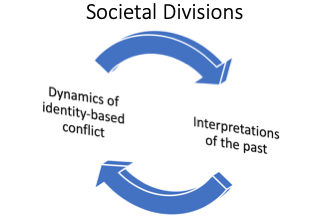
Collective memory shapes how societies understand conflict and interact in the present.
Collective memories about past conflicts are continually constructed and reconstructed through social and political institutions. Memories of trauma, victimization, glory and triumph shape how groups perceive and interact with each other in the present, making contemporary views of the past central to conflict transformation. History education practices are a key tool for shaping collective memory about past conflicts, and therefore have the potential to pose both a critical barrier and opportunity for reconciliation.
The RCID Lab defines history education as a broad concept that includes school education (textbook and instruction), memorials, museums, and archeological sites, popular culture, internet, and mass media. The RCID Lab’s aim is to analyze the main mechanisms, stakeholders, and media through which history education is created and disseminated and how it impacts society. The Lab also works to identify possible models for reconciliation and restoration of justice.
The RCID Lab’s guiding questions for history education and collective memory include:
- Co-existence:
How can multiple collective memories co-exist? - Representation:
How can history education practices represent diverse groups? - Reconciliation:
How effective are dialogue and multiperspectivity? - Multiple truths:
How can multiple truths be recognized and accepted?