
Multiplicity of Collective Memories
Understanding how different collective memories shape identities, narratives, and conflict in society.
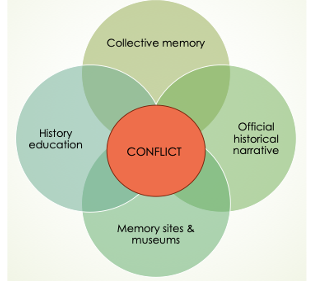
Multiple collective memories shape how societies interpret the past and navigate conflict in the present.
Societies experiencing or recovering from violent conflict must often deal with the legacy of difficult historical events, such as civil war, genocide, exploitation of minority groups and various other forms of violence. Difficult questions arise about whether and how to represent and commemorate such events in a way that reflects the experiences and interests of various, often competing, societal factions, which is further complicated in an increasingly interconnected world. These questions about historical responsibility, commemoration and justice often serve as a barrier to reconciliation, and failure to effectively address them can spark social dissatisfaction, polarization and violence.
The RCID Lab’s guiding questions for collective memory and reconciliation include:
- Co-existence:
How can multiple collective memories co-exist? - Representation:
How can history education practices represent diverse groups? - Reconciliation:
How effective are dialogue and multiperspectivity? - Multiple truths:
How can multiple truths be recognized and accepted?