
The Sustainable Peace Lab consists of a core management team, temporary fellows, and affiliated student and faculty members. Most of our lab team and members are from our host institution, the Jimmy and Rosalynn Carter School for Peace and Conflict Resolution at George Mason University. However, we also have affiliates and fellows from other GMU departments, other universities, and non-academic institutions.
Our Team

Dr. Karina Korostelina, Sustainable Peace Lab Director
Karina V. Korostelina is a Professor and a Director of the Sustainable Peace Lab at the Carter School for Peace and Conflict Resolution, GMU. She is establishing member and a President of the International Association for Reconciliation Studies. Dr. Korostelina conducts research on the dynamics of identity and power in protracted conflicts. Her recent interests include the study of peace processes, resilience, reconciliation, and role of memory and history in conflict and post-conflict societies. She has been Fulbright New Century Scholar and fellow at the Woodrow Wilson Center, the Eckert Institute, National University of Singapore, East-West Center, Institute for Advanced Studies at Waseda University, Northeast Asia Foundation, Central European University, and the Bellagio Center of the Rockefeller foundation. She has conducted comparative research and practiced conflict resolution in Armenia, Bangladesh, Brazil, Ethiopia, Fiji, Georgia, Japan, Kyrgyzstan, Lebanon, Morocco, Mexico, Russia, Senegal, Serbia, South Africa, South Korea, Sudan, Tajikistan, Turkey, Ukraine, and the U.S. She has received 53 grants from such Foundations as MacArthur, Luce, Spencer, Ebert, and Soros, the US Institute of Peace, US Department of State, US National Academy of Education, USAID, INTAS, IREX, and Council of Europe. The results of her research are presented in more than 100 articles and chapters. She is an author or editor of 18 books including authorship of Memory sites and dynamics of conflict: collective memory, identity, and power(2024), Neighborhood Resilience and Urban Conflict (2021), Trump Effect (2016), International Insult: How Offence Contributes to Conflict (2014), Constructing Narrative of Identity and Power (2013), History Education in the Formation of Social Identity (2013), Why they die? (2012), The Social Identity and Conflict (2007). Among her edited books are: Identity and Religion in Peace Processes: Mechanisms, Strategies, and Tactics (2024),History Can Bite – History Education in Divided and Post-War Societies (2016), History Education and Post-Conflict Reconciliation (2013), Forming a Culture of Peace (2012), Civilians and Modern War (2012), Identity, Morality and Threat (2006).
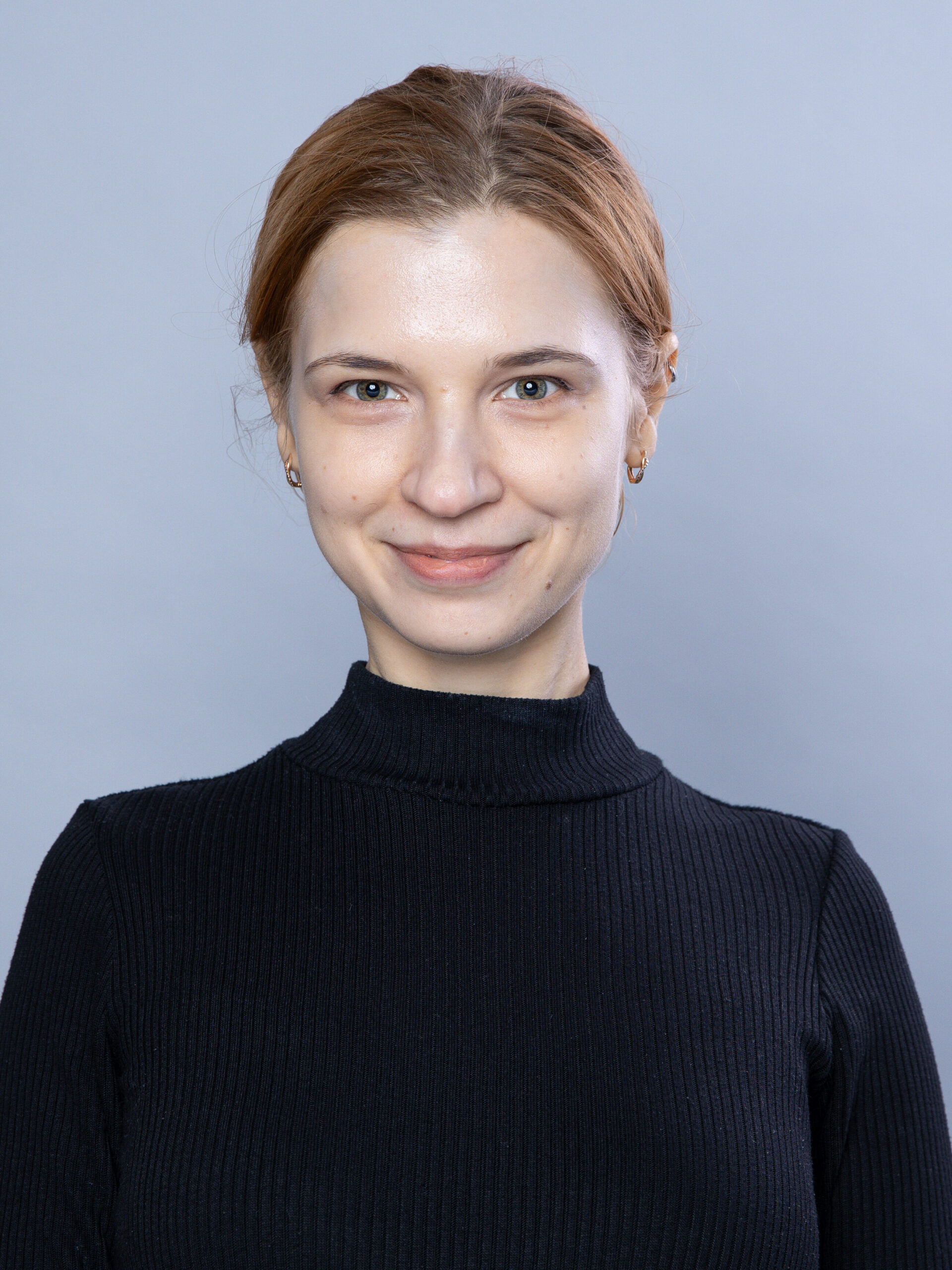
Ksenia Bakhtiarova, Sustainable Peace Lab Manager
Ksenia (Xenia) Bakhtiarova is a PhD Candidate at the Carter School for Peace & Conflict Resolution. Ksenia manages all of the lab’s work, including research design and implementation, business development, and supervising the work of research assistants and fellows. Her work with the lab is intertwined with her own research: she focuses on identity, collective emotions, and collective trauma in groups affected by conflicts. She specifically focuses on the role of dialectical thinking and emotional complexity in predicting collective behavior. Her research draws on theories and frameworks from social and cultural psychology and philosophy. Ksenia also utilizes her extensive understanding of peacebuilding projects as she worked for over 5 years as a consultant for government and international aid organizations.
If you have any questions about the lab or Ksenia’s research, you can contact her at [email protected].

Jungwoo (Jaden) Son is a graduate student at the Carter School, George Mason University, pursuing an MS in Conflict Analysis and Resolution with a concentration in Dynamics of Violence. His primary research interest is the influence of historical education in reducing conflict and how it could lead to reconciliation and peace dialogue. Prior to joining the Sustainable Peace Lab, Jungwoo served as a Research Intern at the Peace and Conflict Studies Center Asia (PACSC Asia), participated as a facilitator for the Incheon Citizen College, National HRD Institute, and the Korea National Diplomatic Academy, where he assisted lectures on constructive conflict resolution and facilitated high-level negotiation simulations.

Adysen is a graduate student at George Mason University researching the intersections of missing and disappeared persons and sustainable peacebuilding. She has previous work experience with the Alliance for Middle East Peace, Churches for Middle East Peace, the International Center for Religion & Diplomacy, and the Post-Conflict Research Center in Sarajevo. Her passion for sustainable peace was shaped by experiences in Palestine working alongside religious and traditional peacebuilders and women-led initiatives, which ultimately led her to her current research and professional path. Based in Washington, DC, Adysen can also be found studying Arabic, running, or traveling.
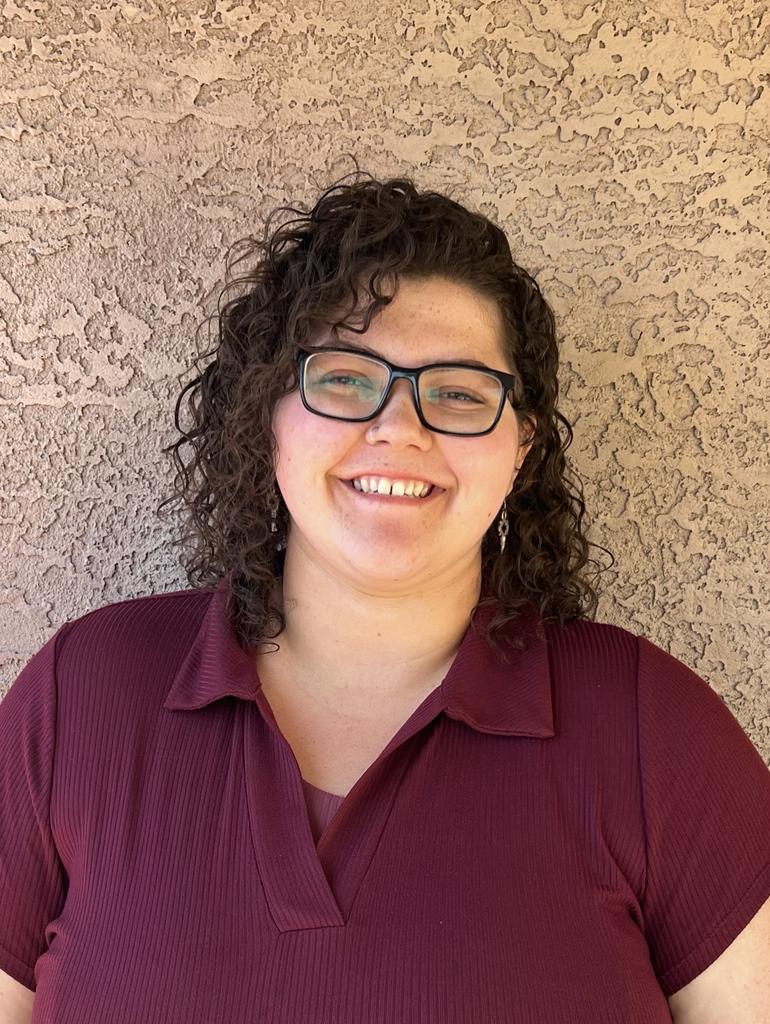
Merisa K. Mattix is a master’s student studying Conflict Analysis and Resolution at George Mason University’s Carter School. Her focus is local reconciliation processes in the Horn of Africa. Currently, she teaches Foundations of Research and Inquiry for the Honors College and serves as the Insider Mediators Community of Practice Coordinator for Think Peace Learning and Support Hub. Throughout her studies and professional experience, she investigates dehumanization and identity dynamics as well as conflict dynamics within the American Christian Church. Expanding on the knowledge of these dynamics, she is writing her thesis on community healing in the Mt. Elgon region of Kenya after post-election violence in 2008.
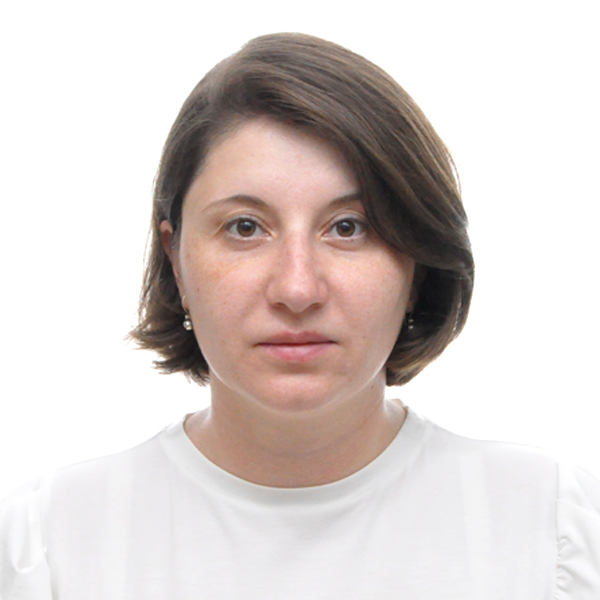
Olesya Vartanyan is a PhD student at the Carter School and a conflict analyst with over 15 years of experience in the South Caucasus. She writes column for EVN Report and publishes analysis for leading think tanks, including the Carnegie Endowment, FES, and ISPI. Previously, Olesya worked with international organizations such as the International Crisis Group, Freedom House, and the OSCE, conducting field research and contributing to policy-relevant reports on Abkhazia, South Ossetia, and Nagorno-Karabakh, including through confidential peace processes. In 2024, she received the International Young Women’s Peace Award. She began her career as an investigative journalist, reporting on security issues in the South Caucasus, including for The New York Times during the 2008 Russia-Georgia war.

Abi Cunningham currently pursues an MS in Conflict Analysis and Resolution at the Carter School, along with a certificate in Contemporary Dispute Resolution. She earned her BA from the University of Colorado Boulder in Chemistry, Conflict Resolution, and Intercultural Peace Studies, and her past research has focused on sanctions and comparative analyses of proposed peace plans for Ukraine. She also develops peace education programs for faith communities. Her research agenda examines the double-empathy problem in conflict coaching, addressing a gap in many conflict resolution paradigms, as neurodivergent individuals participate in peace processes at all levels—from community mediation to international affairs—yet the impact of double-empathy dynamics remains largely absent from existing models.
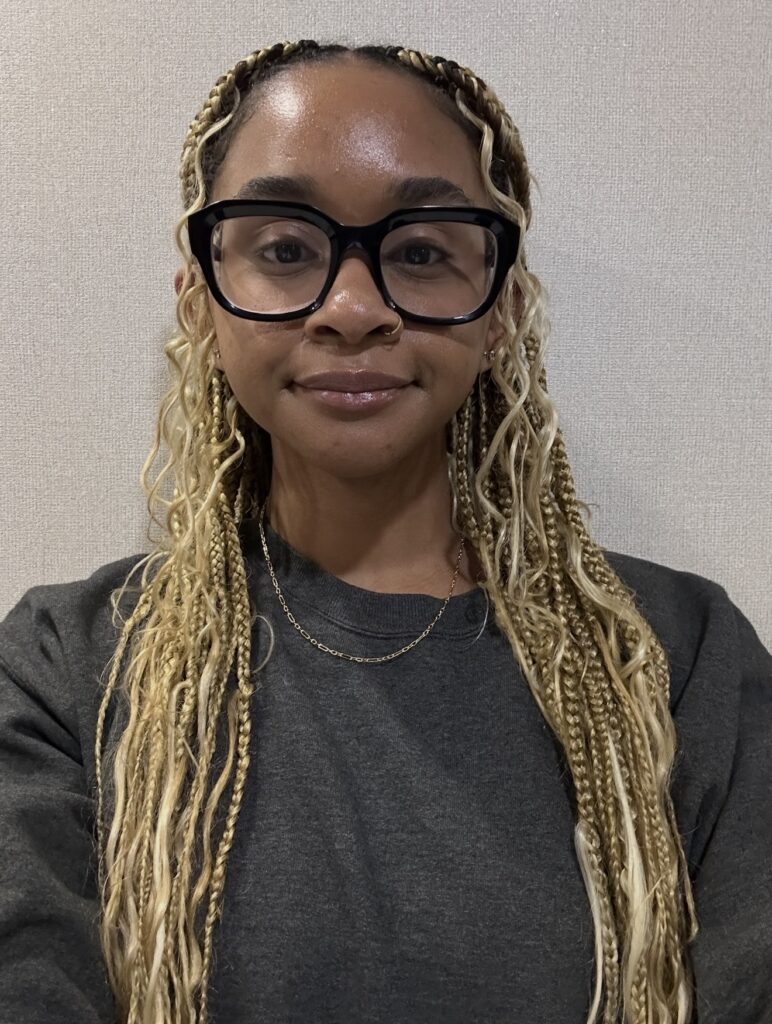
Angel Williams is an undergraduate student at the Carter School for Peace and Conflict Resolution at George Mason University. Her academic interests focus on environmental conflict and advocacy work, particularly examining how environmental harm intersects with labor rights, community well-being, and social justice. She has previously worked with the Labour Protection Network Foundation through an internship based in Thailand, where she supported advocacy and research efforts related to worker protections. Angel brings skills in qualitative research, policy analysis, advocacy writing, and community engagement. She is currently based at George Mason University, with her home in southeastern Virginia. Outside of her academic and professional work, Angel enjoys skateboarding, traveling to new countries, and attending live concerts.

Beltina Gjeloshi is pursuing a PhD at the Carter School for Peace & Conflict Resolution. As a fellow with the Sustainable Peace Lab, Beltina is supporting communications and outreach to raise awareness of the Sustainable Peace Lab’s work – particularly among conflict resolution and reconciliation practitioners – and assist with business development activities. A particular focus of Beltina’s work has been to develop the Sustainable Peace Lab’s website in a way that engages both academic and practitioner audiences. Outside of her work as a fellow, Beltina is an active student affiliate of the Sustainable Peace Lab and her research examines the functions of socio-psychological dynamics of social conflicts.

Michael (Mike) Sweigart, Ph.D., is a Senior Research Fellow at the Sustainable Peace Lab. His research examines the roles of group identities and norms in contentious social and political change processes. Outside of his affiliation with the RCID Lab, Mike works as Director of Social and Behavioral Science & Learning at Democracy International (DI). In this role, he leads a technical team that supports evidence-based democracy, human rights, and governance programming through the application of social and behavioral science and monitoring, evaluation, and learning. Mike has a Ph.D. in Conflict Analysis & Resolution, a Master of Public Administration, and a B.A. in International Affairs.

Billy Agwanda is a PhD Presidential Scholar at the Carter School for Peace and Conflict Resolution. He has been published in peer reviewed journals and he has also contributed book chapters in the Routledge Studies in Peace and Conflict Resolution, Palgrave Encyclopedia of Peace and Conflict Studies, Routledge Handbook on Human Security and Sustainable Development in East Africa, among others. His research interests include identity and intergenerational divide in political activism, political violence, critical terrorism studies, peacebuilding and conflict resolution approaches.
Students & Alumni Affiliates
Gul M. Gur, PhD Alumna, Carter School for Peace & Conflict Resolution. Dr. Gur is a Senior Lecturer at American University specializing in conflict analysis, peacebuilding, and intercultural communication. She holds a Ph.D. in Conflict Analysis and Resolution from the Carter School for Peace and Conflict Resolution at George Mason University, where she also serves as an adjunct faculty member. With a strong background in teaching and research, Gul has developed and taught a wide range of courses covering topics such as identity and intergroup conflict, youth in conflict, and international peace and security. Gul has several journal and book chapter publications, including Functional Coexistence in Cyprus published in December 2024. In addition to her academic achievements, Gul serves as the Secretary of the International Association for Reconciliation Studies (IARS) and has extensive consultancy experience in project design, monitoring and evaluation, and intercultural communication. She has collaborated with various organizations, including the Institute of Economics and Peace, Search for Common Ground, and Partners Global, to advance peacebuilding initiatives globally.
Mathieu Bere, PhD Alumnus, Carter School for Peace & Conflict Resolution. Dr. Mathieu Bere is an alumnus at the Carter School for Peace & Conflict Resolution (George Mason University) where he contributed recently to the Sudan Conflict Observatory Project as a Conflict Monitoring and Analysis specialist. His research focuses on conflict prevention and peacebuilding approaches based on inclusive governance and development. He has published several research products, including a book in French, on violent extremism and terrorism in the Sahel. He co-founded with alumni of US cultural exchange programs a small non-profit, the Center for Peace and Security Research in the Sahel, in 2022 to contribute to sustainable peace and reconciliation in that troubled part of the world.
Natia Chankvetadze, PhD Candidate, Carter School for Peace & Conflict Resolution. Natia has experience in teaching, consultancy, and program management related to peacebuilding and conflict transformation. She has led and implemented research projects on Everyday Peace, Conflict Transformation, Trade Facilitation, Youth Engagement, Trauma Narratives, and Track I dialogue within the context of Georgia. Natia co-authored a book “Women During and After War”, as well as two handbooks on Peace and Conflict Transformation in Georgia. Drawing upon this work, Natia also writes policy research and analytical articles for local and international organizations and think tanks. Natia is also an experienced instructor, with experience teaching “Peace Policy Analysis” at the Ivane Javakhishvili Tbilisi State University (2017-2021) and working as a non-resident scholar for the Frontier Europe program at the Middle East Institute. Learn more about Natia and her work on LinkedIn. Natia can be reached at [email protected].
Alexander Jones, MW Student, at the Carter School for Peace & Conflict Resolution. Originally from Massachusetts, Alexander has worked in museums and libraries for over 6 years and his main research interests are public history, peace education, and atrocity prevention. For his M.S. thesis, Alexander is studying how museum visitors in the U.S. experience difficult histories in a time of heightened political polarization.
Naomi Kraenbring, PhD Student, Carter School for Peace & Conflict Resolution. Naomi lives and works in Lancaster County, Pennsylvania. Her research is focused on this geographic area, dubbed by the BBC in 2017 as “America’s refugee capital,” and Naomi is specifically interested in how religious social identity might inform Lancaster’s welcoming posture towards refugee resettlement. Naomi is a graduate of Bethany Theological Seminary in Richmond, Indiana, and is deeply connected to the Church of the Brethren, one of the three Historical Peace Church traditions. She is passionate about interfaith peacebuilding, as well as spaces that invoke the creative, sacred act and art of peacebuilding in non-religious contexts. Learn more about Naomi and her work on LinkedIn. Naomi can be reached at [email protected].
Engy Said, PhD Candidate, Carter School for Peace & Conflict Resolution. Engy holds an MA in International Peace and Conflict Resolution from the University of Notre Dame, Indiana, and a BSc in Economics and Political Science from Cairo University. She has more than 13 years of experience in government affairs and foreign policy with a focus on the Middle East and North Africa region (MENA) as well as Europe and the Mediterranean. She also has experience working on the environment, climate change, and sustainable development. Her current research interests include structural violence, the political economy of conflicts, identity, and conflict transformation. Engy can be reached at [email protected].
Nicholas Sherwood, PhD Candidate, Carter School for Peace & Conflict Resolution. How can peacebuilders maintain and improve psychological resilience while operating in conflict zones? This and other related questions shape Nick’s research and practice agenda, which draws from a transdisciplinary array of scholars and practitioners in peace and conflict studies; clinical, health, and social psychology, medical and cultural anthropology; and international relations. Nick is currently working on his dissertation project, examining psychological resilience within a global sample of peacebuilders supporting reconciliation in their own communities. Nick has conducted fieldwork throughout the United States and in the Middle East / North Africa region. His research has been published in peer-reviewed journals, policy briefs, and other public scholarly publications. A 4th-year Ph.D. candidate at the Carter School, Nick also serves as the Associate Director of the Mary Hoch Center for Reconciliation. Finally, Nick sits on the Board of Directors of The Parachute People, an NGO conducting mental health promotion and community-building at music festivals and live music events worldwide. Nick plans to defend his dissertation in the summer of 2023 and is currently on the job market. Learn more about his professional knowledge, skills, and abilities/competencies on his LinkedIn page. Nick can be reached at [email protected].
Faculty Affiliates
George Mason University Faculty
Dr. Steven Barnes
Dr. Charles Chavis
Dr. Marc Gopin
Dr. Mark Helmsing
Dr. Karina Korostelina
Dr. Alison Landsberg
Antti Pentikainen
Dr. Daniel Rothbart
Dr. Mara Schoeny
Dr. Peter Stearns
Dr. Mills Kelly
Other Faculty
Dr. Tamra d’Estree, University of Denver
Dr. Hope Harrison, George Washington University
Dr. Christine R Henry, Mary Washington University
Dr. Maria Repoussé, Greece.
Dr. Daqing Yang, George Washington University
Collaborations
The RCID lab collaborates with centers and labs at the Carter School and externally that have expertise on reconciliation. Partners include:
The Rotary-Carter School Peacebuilding Initiative in CyprusThe initiative aims to address the root obstacles that have hindered peace in Cyprus and to create actionable strategies that advance reconciliation. Participants will be guided through a process that explores the historical and current challenges to peace, generating innovative solutions and building a framework for sustained collaboration. The project aligns with ongoing peace initiatives in Cyprus and leverages the warming relations between Turkey and Greece, as well as the heightened involvement of the UN and the European Union.
The initiative’s primary objectives are to enable Rotarians to implement more impactful peacebuilding projects, raise the profile of their efforts, and share their experiences and proposals with other regional and international actors. The program will also produce a White Paper that captures the findings, recommendations, and proposed projects of the participants.
- Mary Hoch Center for Reconciliation
- Center for World Religion, Diplomacy, and Conflict Resolution
- Program for History, Memory, and Conflict
- Department of History and Art History
- Roy Rosenzweig Center for History and New Media
- John Mitchell, Jr Program for History, Justice, and Race
- Jena Center for Reconciliation Studies, Jena, Germany.
- The Georg Eckeret Institute for International Textbook Research, Braunschweig, Germany.
- Center for Reconciliation Studies, Waseda University, Japan